Nourish Young Minds with Living Books
I’ve been an avid reader since childhood, spending many an early morning or a late night wrapped in a cozy blanket with a warm beverage and a good book. As I have grown as a reader, I have learned to find books that are life-giving, ones with beautiful language, ones that open doors to places I have never been and lives I have never lived, as well as ones that help me understand myself and my surroundings.
The value of snuggling up with a good book, fiction or nonfiction, can not be underestimated. These days, little feet often pitter-patter downstairs to join me. Sometimes they request a read-aloud; other times they bring their own books and join me for a while. Whether you are reading aloud or simply sharing a couch, enjoying books together helps children fall in love with reading and with the beautiful world around them.
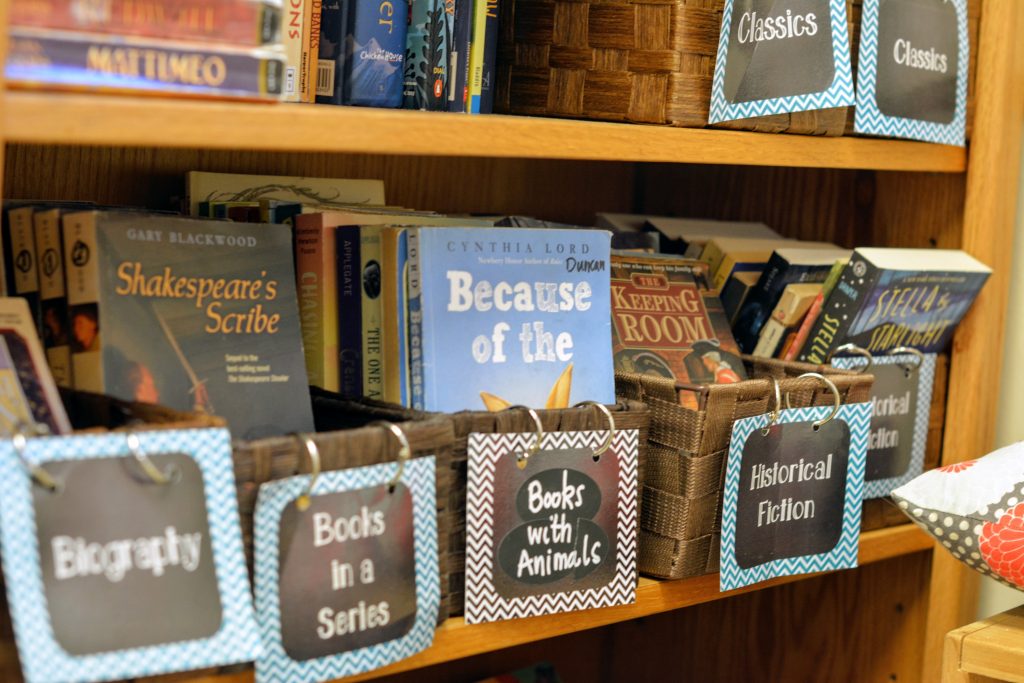
At Redeemer School, we seek to nourish students’ minds with a steady diet of what 19th century British educational philosopher Charlotte Mason called living books. Mason described living books as works that “possess certain literary qualities able to bring that sensible delight to the reader which belongs to a literary word fitly spoken.” They are works of high literary quality that deal directly with the subject at hand in an interdisciplinary way, and may be fiction, biography, a primary source, or other expository text.
Living books feed young minds on ideas from the directly articulated experiences and ideas of predecessors and contemporaries. As a child’s imagination is captured by living books, they are exposed to correct grammar, spelling, and other mechanics of written language, as well as the precision and range of a complex vocabulary.
“The children must enjoy the book. The ideas it holds must each make that sudden, delightful impact upon their minds, must cause that intellectual stir, which mark the inception of an idea,” wrote Charlotte Mason in School Education.
No matter the age of your child, living books shine when read aloud by parents to children or by children to one another. They can, of course, also be absolutely wonderful when read silently by children or adults.
Many living books are available as audio recordings as well, which can be a great alternative to screens during holiday travel, or as a backdrop for craft time or Lego-building sessions. My family uses the library’s (free!) Libby app, along with the paid service Audible, to download audiobooks. You can also find living books on CD to check out from your local library branch.
Are the stories you choose for your children alive?
Here’s how to tell if your selection is a living book:
- Does the story catch and hold the interest of the reader?
- Is the story timeless, in the sense that regardless of when it was written, it can still be enjoyed and related to today?
- Do the characters speak and behave the way people in a particular place and time of the story would be likely to speak and act? Are the story’s settings, culture and factual background depicted with depth and accuracy?
- Are the emotions and reactions of the characters true to the reality of human experience?
- Are the characters well rounded and do they develop as the story goes on, changing in response to events, insights they have gained, etc.?
- Are the overall language use, vocabulary and writing style excellent?
- Are the values, truths, or lessons which might be drawn from the story an integral, natural part of the whole? Does the reader simply see and infer them on his own without tracking on sermons or heavy-handed moralism?
(Adapted from Teaching Children by Diane Lopez.)
Living book recommendations
Let these recommendations from Redeemer School teachers jump-start your holiday reading!
Early elementary (K-2 grade):
- Christina’s Carol by Tomie dePaola
- Grandma’s Gift by Eric Velasquez
- Too Many Tamales by Gary Soto and Ed Martinez
- The Legend of the Poinsettia by Tomie dePaola
- Red & Lulu by Matt Tavares
- The Night Tree by Eve Bunting
- On the Banks of Plum Creek by Laura Ingalls Wilder
- The Christmas Coat by Clyde Robert Bulla
- The Christmas Mouse by Elisabeth Wenning
- Mr. Willowby’s Christmas Tree by Robert Barry
- The Christmas Flower by Gwen Ellis
- Holly & Ivy by Rumer Godden & Barbara Cooney
- I Saw Three Ships by Elizabeth Goudge
- Silver Packages by Cynthia Rylant
Upper elementary (3-5 grade):
- A Christmas Carol by Charles Dickens
- The Lion, the Witch, and the Wardrobe by C.S. Lewis
- Mr. Popper’s Penguins by Richard & Florence Atwater
- The Long Winter by Laura Ingalls Wilder
- Julie of the Wolves by Jean Craighead George
- The Last Holiday Concert by Andrew Clements
- Caleb’s Story by Patricia MacLachlan
- The Vanderbeekers of 141st Street by Karina Yan Glaser
Middle school (6-8 grade):
- Hawk that Dare not Hunt by Day by Scott O’Dell
- Forge by Laurie Halse Anderson
- The Call of the Wild or White Fang by Jack London
- Letters from Rifka by Karen Hesse
- War Horse by Michael Morpurgo combined with Shooting at the Stars: The Christmas Truce of 1914 by John Hendrix
Favorite audiobook recordings:
- The Velveteen Rabbit (Rabbit Ears Entertainment)
- A Christmas Carol (Focus on the Family Radio Theatre)
- The Long Winter (HarperAudio)
- James Herriot’s Treasury for Children (MacMillan Audio)
- The Nutcracker (Maestro Classics)
- The Savior is Born (Rabbit Ears Entertainment)
- Winter Holiday (Audible Studios)
Additional Resources
For more living book recommendations, we suggest the following:
- Honey For A Child’s Heart by Gladys Hunt
- Books Children Love by Elizabeth Laraway Wilson
- The Read-aloud Handbook by Jim Trelease
- Eyeopeners! by Beverly Kobrin